Saturday, February 6, 2010

Creative Commons cites Pacific Scoop as case study

Pacific Media Centre

Pacific Scoop, the new niche website launched by the Pacific Media Centre and Scoop Media last August, has been featured on the Creative Commons case study wiki. Sections of the case study report are republished here - with some amendments where Pacific Scoop has been confused with the long-established parent website Scoop, which has been publishing for a decade.

Pacific Scoop was established in 2009, the result of a joint venture between AUT University’s Pacific Media Centre and the independent news portal Scoop. It is the leading news resource in New Zealand for people behind the news, rather than just readers/viewers. Pacific Scoop aims to address the lack of coverage of Pacific news stories in the mainstream media by reporting on Pacific news, current affairs and analysis. The aim is to provide an independent voice of the Pacific which will tell the hidden stories and highlight under-exposed issues.

Pacific Scoop - like the main Scoop website - prides itself on delivering news when it happens, unprocessed and independent, so readers can get the
whole story and form their own opinions. Scoop’s mission is “to be an agent of positive change”. It seeks to provide an open forum for the expression of a variety of perspectives without "spin" or prejudice from either the reporters or a multinational media conglomerate.

The website is being updated with stories by postgraduate Pacific student journalists and other media students. Academics,
regional journalists and civil society advocates and analysts are also contributing articles posted on the website. The website is updated daily with more than 100 Topic Indexes, including “education, culture, creativity, environment, health, human rights, media, social justice, resource development, regional security and technology”.

Specific issues being highlighted include those of censorship and democracy in Fiji and Tonga.


Scoop has already received a number of awards, including a 2005 Democratic Media Award and ranked third by Nielsen Net//Ratings in their News Category. It was also a finalist in the Qantas Media Awards Best News Site in 2007 as well as Netguide Magazine’s Web Awards in 2004.


Licence use

Pacific Scoop has chosen an
Attribution-NonCommercial-NoDerivatives New Zealand licence to release its content under. This means that readers can use the content on the website as long as they attribute the work, only use it for non-commercial purposes and not alter, transform or build upon the work.

Just as is the case for the Pacific Media Centre website, the licence is applied through the use of a licence button on every page of the site linking to a summary of the licence, which in turn links to the full licence.


The website averages more then 450,000 reported readers a month and is clearly a leading news resource in New Zealand so the use of a Creative Commons licence will allow readers to more easily use the material available.


Motivations

Pacific Scoop and Scoop believe “…in the power of compelling ideas to propel themselves into political consciousness if they are able to get exposure and be debated”.
The use of a Creative Commons licence has enabled readers of Scoop to more easily use the information they find on the website. This means that the material on the site will receive greater exposure and helps them to achieve their aim of encouraging people to get their news from an independent, informative source.

Pacific Scoop’s mission embodies the ideas of “freedom, expression, ideas, information, empowerment, transformation”. Releasing their material under a CC licence will serve to help the free expression of ideas and information in an open forum and encourage people to take a more active role in digesting news.

Except where otherwise noted, content on this site is licenses under a Creative Commons Attribution 3.0 licence. Top graphic: LuMaxArt gold figures from Technuit.

Media
Retrieved from http://wiki.creativecommons.org/Case_Studies/Pacific_Scoop
Category: Casestudy
Pacific Scoop cited as innovative funding model

Wednesday, February 3, 2010

Buchanan to speak on Pacific geopolitics at PMC

Pacific Media Centre

International relations and security analyst Dr Paul Buchanan is returning to New Zealand for a month and will deliver a public lecture focusing on South East Asia and South Pacific geopolitics and security.

The lecture is open to the public and is hosted by AUT University’s Pacific Media Centre.

Most recently a Visiting Associate Professor at the National University of Singapore, Dr Buchanan was one of New Zealand’s most recognised experts on international affairs prior to his departure overseas on extended research leave in 2007.

While in New Zealand, Dr Buchanan will be researching New Zealand security policies after 1990 as part of his book project titled Security Politics in Peripheral Democracies.

Dr Buchanan will also be offering a lecture on Western Pacific geopolitics hosted by the Pacific Media Centre where he will focus on South-East Asia and the South Pacific through the lens of US-China competition in the region. He will also host a series of informal discussions on contemporary international issues with interested parties in Auckland and Wellington.

Public Lecture: AUT University, Pacific Media Centre, All Welcome
Title: Democratic Fragility, Authoritarian Persistence and Strategic Competition in the Western Pacific Rim

Topic: SE Asia and the South Pacific through the lens of US China competition in the region

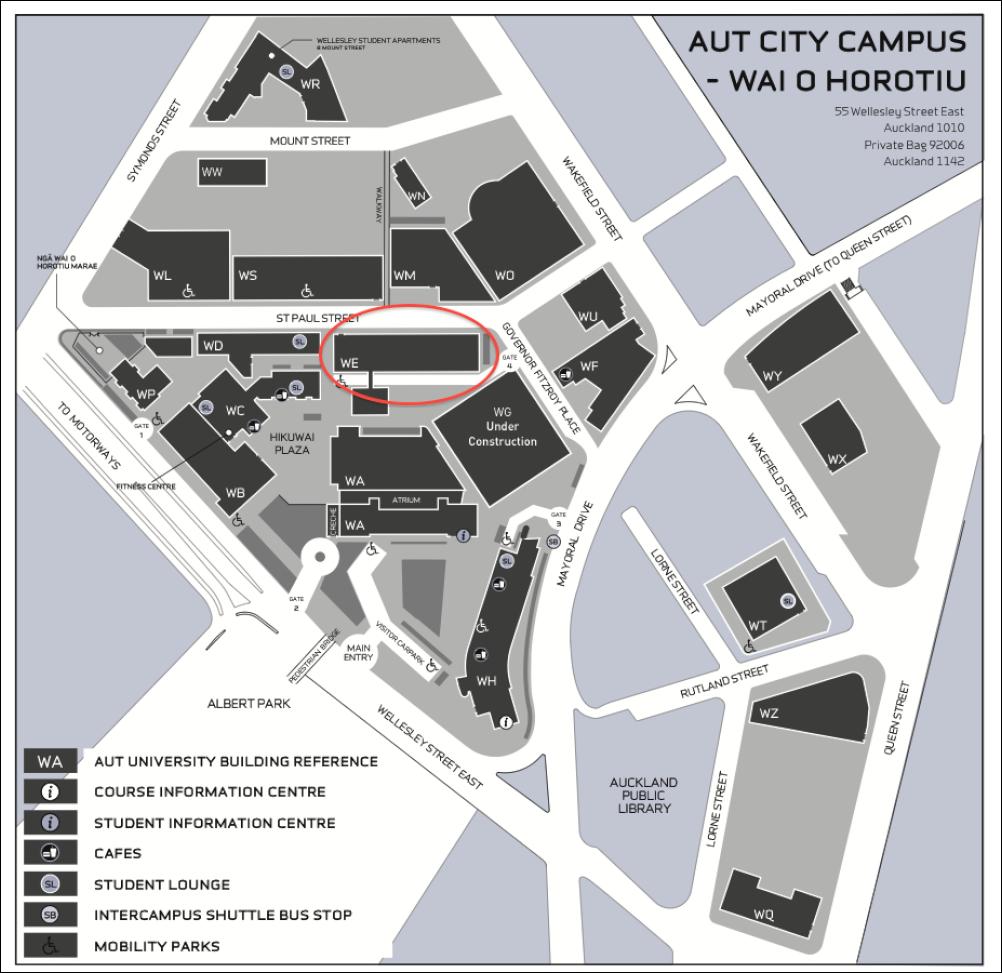
Where: AUT University lecture theatre – WE230, Wellesley Campus, Auckland

When: Friday, February 12, 5pm to 6.30pm.


Click here for an AUT campus map showing the location of the lecture.

More background information at Pacific Scoop.

Nurse wins first Kiwi Asian journalism scholarship

Pacific Media Centre

A young Filipina-New Zealander has been awarded the first Asia New Zealand Foundation Kiwi Asian Journalism Scholarship.

The successful candidate, Corazon Miller, is of Filipina and New Zealand European descent. She is bilingual in Tagalog and English.

Miller is currently employed as a nurse at Auckland Hospital’s Neonatal Intensive Care Unit.

She intends to use the communication and cultural awareness skills she has acquired during her short career as a health professional to embark on her new direction as a journalist.

“Despite our growing Asian population, New Zealand has a shortage of Asian journalists. Many of the Asian population fail to identify with the mainstream media,” she said.

“As Asian New Zealanders, it is their right to have access to the media. As a Kiwi-Asian journalist I hope that I will be able to facilitate that within their community and within the media industry.”

Miller has enrolled in a Postgraduate Diploma in Communications Studies with a journalism major at AUT University in Auckland and is planning to do the Asia-Pacific Journalism course – the first of its kind in New Zealand.

The Kiwi Asian Journalism Scholarship is designed to attract more young Kiwi Asians into journalism study and to encourage increased representation of Asian communities in mainstream journalism.

A 2007 survey of New Zealand journalists undertaken by the New Zealand Journalism Training Organisation (NZJTO) showed that only about 2 percent of all journalists working in the mainstream English language news media were Asian.

The Kiwi Asian Journalism Scholarship will apply to the 2010 academic year and is for the value of $5000 to be paid on completion of Miller’s course of journalism study.

The 2011 scholarship will be open for applications in August.

Source: Asia New Zealand Foundation

Tuesday, January 26, 2010

Pacific Media Watch wins grant to boost freedom of expression project

Pacific Media Centre: pmw2627

The Pacific Media Watch freedom of expression monitoring project at AUT University has been awarded a $15,000 development grant to expand its regional database and journalism resource.

The PMW project was adopted by AUT’s Pacific Media Centre in 2007 and has been developed by Pacific Islands contributing editors based in the School of Communication Studies for the past three years.

Previously, the project had been steered by journalists in the region working as volunteers.

A grant has now been awarded by the Pacific Development and Conservation Trust to the PMC which will enable the project to expand its educational and research role for the region and to enhance the involvement of postgraduate student journalists.

“This is an important development for us and will enable the PMC to significantly improve the resources made available through the university’s PMW database and integrate it with other digital developments planned by the centre for later this year,” says PMC director Associate Professor David Robie.

Contributing editor of the project for the past 18 months has been Josephine Latu of Tonga. She followed Taberannang Korauaba of Kiribati who worked on the project in 2007.

Other AUT postgraduate student journalists have also contributed to the text, video and audio resource, which links to the new regional news website Pacific Scoop.

Pacific Media Watch was originally established at the University of Technology, Sydney, and University of Papua New Guinea in 1996.

Background on Pacific Media Watch
The PMW database is at: www.pacmediawatch.aut.ac.nz

Sunday, January 17, 2010

Crowd pleasers - a new way to pay for quality journalism

By Nick Evershed, of NPA Bulletin

Newspapers have seen a number of new media outlets present both threats and opportunities over the years, from radio and TV to the internet.

Now there is a new one to add to the list - non-profit news publishers.

It has been announced that the Foundation for Public Interest Journalism in Melbourne, Australia, intends to present a new model for funding news content.

Margaret Simons, chair of the foundation, says they are considering three or four models which are partially based on the US organisation, Spot.us.

“The existing business models are in crisis,” she says. “It’s hard to persuade the established business models to innovate.”

She says the foundation would be an experiment in “community-driven commissioning”.

Spot.us uses a system of “crowd funding”. A pitch for a story is placed on their website, and then members of the public can donate money to fund a registered freelance journalist to write the story.

Publishers can also donate money to story pitches, and if they fund 50 per cent of a story pitch they gain first-publishing rights on the story. If they pay for all of it, they gain exclusive rights to the story.

The founder of Spot.us, David Cohn, says they are not in competition with traditional news publishers. Rather, they are helping them.

Freelance costs
He says his model allows newspaper to reduce their freelance costs as the public will help to fund stories they want to see published.

“When I talk with people in traditional news organisations, they like the idea,” he says.

Even if a publisher does not pay a cent towards a story, they can still benefit. Stories are released under Creative Commons licensing if a media company does not buy publishing rights.

The Creative Commons system allows users to release content from certain aspects of copyright, while maintaining others. In the case of Spot.us, this allows content to be freely used by news organisations, so long as the work is attributed to the original author.

In this way, Cohn says Spot.us “can be a little bit of an Associated Press in a sense”.

Despite the potential to reduce publisher’s costs, he stresses that non-profits are not “some kind of saviour” for the financial troubles of the newspaper industry.

“This is not a silver bullet,” he says. “I don’t think there is any such thing.” He adds that while individuals in traditional news organisations are enthusiastic about Spot.us, he finds newspapers executives cautious about using his service.

The San Francisco Chronicle is the largest newspaper in Spot.us’ area of operation, the San Francisco Bay area. The Chronicle has also seen a 25 percent drop in circulation in the last six months, the largest of any major US newspaper.

The Chronicle’s editor-at-large, Phil Bronstein, sits on the board of the Centre for Investigative Reporting, the oldest non-profit news organisation in America.

New content ventures
He says he always keeps an eye out for new content ventures, and likes Spot.us.

“If a newspaper loses 10, 15, 30 or even 75 percent of its staff, there’s clearly going to be things that you’re no longer covering,” he says.

“So you need to look for other ways to fill those gaps.”

Bronstein says it’s possible Spot.us will help the Chronicle save money. However his newspaper has been cautious but discussed with Spot.us staff about collaborating on some projects.

He says smaller, independent news models are also better placed to experiment and test new ideas, which can be difficult in the “somewhat insular” business model of a large newspaper.

“It’s a great way to get ideas that don’t come from the Chronicle,” he says.

Cohn agrees with this: “Traditional news organisations are somewhat slow to adopt new things,” he says.

“Small, independent organisations are a lot more flexible.”

Pacific Scoop debut
Pacific Scoop, launched in August this year, is a New Zealand-based non-profit news publisher that formed from a partnership between Auckland University of Technology’s Pacific Media Centre and Scoop, an independent New Zealand news site.

They also publish under Creative Commons, and have associations with traditional news outlets in the Pacific region.

Associate Professor David Robie (pictured), editor of Pacific Scoop, says they rely on graduate journalism students - some from the University of the South Pacific which is operating in an environment of censorship in Fiji - and contributing journalists volunteering their content.

“What we’re trying to do is independent journalism, stories and journalism neglected by the mainstream media,” he says.

He adds that despite being the newest addition to the Scoop site, Pacific Scoop is the fastest growing with around 30,000 unique visitors monthly. He attributes the site's popularity to their dedicated coverage of the Pacific region outside New Zealand.

“The New Zealand audience is not particularly well served for Pacific news,” he says.

“There’s no media organisation catering for the mix of strong environmental, human rights, development, cultural and conflict issues that we offer.”

Indeed, it seems most non-profit news publishers are generally skewed towards investigative journalism along these lines.

Niche funding model
Professor Wendy Bacon, at the Australian Centre for Investigative Journalism (ACIJ), says this niche isn’t being adequately filled by traditional publishers.

“As far as I’m concerned there does need to be another funding model for investigative journalism,” she says, adding that there was always a shortage of funds for investigative journalism, even when the newspapers weren’t in the financial trouble that they’re in now.

“It’s probably a good idea to pursue more than one model of publishing, because everything is in a state of flux at the moment,” she says.

In the US, funding non-profits is big business. Billionaire Warren Hellman reportedly donated US $5 million to start up a new non-profit publisher in San Francisco.

Locally, the Foundation for Public Interest Journalism is also calling on philanthropists to support the initiative. Margaret Simons says they have had interest from a few donors, including one “five-figure sum expressed”.

Nick Evershed is a volunteer for Reportage, an ACIJ news website

Browse this article in newspaper format.
Pacific Media Centre on Twitter
More background on Pacific Scoop
Video on Pacific Scoop and PMC

Friday, January 8, 2010

Café Pacific's new decade media awards

Café Pacific marked the transition into the second decade of the century with six awards to media groups and individuals for their efforts in the Oceania region. Edited by the Pacific Media Centre director, Dr David Robie, Café Pacific provides an independent perspective on the region's media issues.

The awards for 2009:
Newspaper of the Year - The Fiji Times: "The rest of the region can thank The Fiji Times and its battling editor Netani Rika for keeping up the good fight and exposing life under media censorship in Fiji."

Film of the Year - Balibo: "The on-screen version of the murder of five journalists working for Australian media in East Timor at the time of the invasion by Indonesian in 1975 has triggered debate about journalistic professionalism in an age when bravado was perhaps more important than the safety concerns dominant today."

Independent Newspaper - Wansolwara: "Not only did the courageous students at the University of the South Pacific publish a special edition examining the media in Fiji under a military regime, but they also reported global warming, environmental issues and human rights in the region."

Media Monitoring Agency - Reporters sans frontières: "In its roundup for the year, RSF highlighted the Ampatuan massacre [in the Philippines] – largest ever killing of journalists [30] in a single day ... and continued its focus on the Pacific."

Independent Blog - Crosbie Walsh's Fiji: "The former University of the South Pacific professor established his own excellent and reliable information and analysis website in a bold attempt to make sense of the complexities of Fiji’s political, social and economic order since the 2006 coup."

Special Freedom of Speech Award - José Belo: "For remaining defiant in the face of threats and a legal onslaught over his exposes of corruption that could have led to imprisonment in East Timor. He was ultimately saved by the collapse of the trumped up “criminal defamation” case against him and Tempo Semanal."

Report on the awards at Pacific Scoop
Full original citations on Café Pacific

Tuesday, January 5, 2010

PMC video storytelling on YouTube

New stories and short docos filed by Pacific Media Centre students and student journos on the AUT television course are posted on our YouTube site. Some of the Māori, Pasifika and Ethnic Film Festival docos hosted by PMC chair's John Utanga of Tagata Pasifika are also included. Happy viewing.

PMC on YouTube
Brief doco about the film festival
PMC on Facebook