Tuesday, March 16, 2010

New PMC book celebrates Solomons women achievers


By Josephine Latu: Pacific Media Centre


When Solomon Islanders at the launch of Being the First were each handed a copy of the book, the general reaction was one of “awe”.

The book is the first ever to document the lives of leading Solomon Islands women from their own point of view, and the first published historical account of achievements by local women over the past 50 years.

It will be launched in New Zealand later today at AUT University.

“They all kind of picked it up and held it close to them – bringing it to their chest. It was quite emotional,” says Suzanne Bent-Gina in Honiara, describing how women responded when given a copy of the book to keep – free.

Bent-Gina, deputy director of the Regional Assistance Mission to Solomon Islands’ (RAMSI) Machinery of Government programme, helped organise the book project as part of its component on women in government.

A former Prime Minister and current Solomon Islands Speaker of Parliament, Sir Peter Kenilorea, introduced the book to a packed house, where many were village women who came in the capital for the International Women’s Day celebrations.

Five of the 14 women featured in the book, along with the sister of the late Phyllis Taloikwai, also profiled, read extracts from their chapters.

Emotional moments
“They were all very emotional and proud when they spoke,” says AUT’s professor Marilyn Waring of the Institute of Public Policy, who co-edited the manuscript with Malaita-born Dr Alice Aruhe’eta Pollard.

The two thought of the book idea in 2008 while discussing how to get Solomon Islands academic theses from Australian and New Zealand universities back to the islands for local readership.

“There are hardly any books written by Solomon Islanders out there. There are anthropological books, travel guides, photographic books – but all written by outsiders,” says Waring.

“Some [Solomon Islands]‘big men’ have written books, but not much information about women. These women who were previously hidden from history are now on public record.”

The pioneering volume includes personal life stories of 14 women, many who grew up poor but went on to break barriers as politicians, heads of government departments, and community workers.

Ruth Liloqula tells how she was born outside her village in a bush, took care of orphans at her boarding school at age 11, then had her first taste of activism when she and others marched in protest against unfair government scholarship selections.

Liloqua was the first female Secretary to Cabinet and is now the Permanent Secretary of Lands, Housing and Survey, and outspoken about cultural attitudes towards gender roles.

‘Average woman’
“[Women] see themselves as subordinates. This is the main problem I see … There’s an ingrained thing that we do not assert ourselves,” she says in the book.

Ethel Sigimanu, Permanent Secretary for Women, Youth and Children’s Affairs, prefers to be treated as an “average woman”, despite her leadership role.

“I was not born with a silver spoon in my mouth, so to get where I am is not impossible. I grew up in rural places and went to rural schools. The first time I went to Pawa [Senior Primary School] my father gave me $2. I was going to be away for a whole year,” she tells in the book.

Meanwhile, in the political arena, Hilda Kari talks about the lack of support she found from male colleagues over the span of her career.

She has been the only female Member of Parliament in the Solomon Islands since 1978.

“I could not name any real men supporters – none at all,” the book quotes in her profile.

Frustrated with unequal treatment at work, Kari ran for Parliament and was voted in for three consecutive elections. After losing her seat in 2001 and 2006, she now supports a quota system to ensure women’s representation at decision making levels.

All the women acknowledged the support of their husbands, families and friends along the way.

‘Transformative experience’
Co-editor Waring, a former New Zealand MP, said putting the book together was a “transformative experience” that involved many helpers.

She and Pollard recruited ex-Public Service Commissioner Catherine Adifaka – a “known leader and someone [the women] would trust” – to conduct the interviews.

Cynthia Wickham, a Solomon Islands marine science graduate, worked from a boat out at sea, translating and transcribing the oral-centred pidgin language.

Local RAMSI staff provided technical assistance.

Being the First: Storis Blong Oloketa Mere Lo Solomon Aelan was finally published by AUT’s Pacific Media Centre for RAMSI and the Institute of Public Policy.

In an all-woman production team, the PMC’s Del Abcede designed the book and Isabella Rasch created the cover montage.

Waring is hoping to get funding for a similar project in the future.

Decision-making
She said that since the launch, the Solomon Islands Ministry of Education has been working to integrate the book into its secondary school curriculum for English and Social Science.

“This book has taken us another step towards the advancement of women into decision-making positions,” Sigimanu announced at the launch.

“These are ordinary women who were not born with silver spoons in their mouths. They too, have had to struggle with the challenges of life – like being able to afford to get their children to school,” she said.

“It is about people looking at where they are now, and seeing that women can indeed rise up – and can do great things for this country.”


Being the First will be launched in New Zealand today by Solomon Islands honorary consul Doreen Kuper on Level 2 of AUT’s Institute of Public Policy at 4pm.

Pictures: Top: Women in the National Women's Day march in Honiara before the book launch. Middle: Betty Fakarii signing a copy of the book; translator Cynthia Wickham, a marine science graduate. Above: Solomon Islands honorary consul Doreen Kuper with co-editors professor Marilyn Waring and Dr Alice Aruhe'eta Pollard.

Josephine Latu is a postgraduate communication studies student from Tonga at AUT University’s Pacific Media Centre who is also contributing editor of Pacific Media Watch.

The book is available online at the Pacific Media Centre and Wheelers and at good bookshops.

Saturday, March 13, 2010

NZ sponsors regional conflict reporting media forum

Pacific Media Centre

JAKARTA: Six New Zealand and Pacific delegates - including Pacific Media Centre director Associate Professor David Robie - were among journalists from across the East Asia region who gathered in Jakarta this week for a conference on reporting the "intersection of politics, religion and culture" in times of conflict.

The three-day conference was co-sponsored by the New Zealand government and the European Union.

"We have seen examples of how media reporting on sensitive issues, particularly in situations of conflict and terrorism can exacerbate tensions," said Chris Langley, New Zealand's deputy head of mission at the Embassy in Jakarta.

"This is especially the case where reporting delves into cultural and religious issues but is not well founded or balanced.

"This conference is a unique opportunity for 57 senior journalists from the region's major media outlets to step back from the daily demands of the newsroom and examine how they are reporting on security issues - what they are doing well and what could be improved."

After the opening, Langely participated throughout the conference as an observer.

The Secretary-General of the Association of South East Asian Nations (ASEAN), Dr Surin Pitsuwan, opened the conference and the keynote address was given by former Indonesian Vice-President Jusuf Kalla.

"We have secured a top line-up of presenters for the conference who will speak from first-hand experience about conflict and journalism in our region," said Langley.

The first East Asian Regional Media Programme was held in Jakarta in late 2008.

A report on this week's conference will be posted on the ministry's website: www.mfat.govt.nz

The Indonesian government and Press Council, and ASEAN were key supporters of this event.

The New Zealand Ministry of Foreign Affairs and Trade organised the conference for journalists from the 16 member countries of the East Asia Summit, which includes New Zealand.

On the closing day of the media forum, delegates were hosted at Pesentren Darunnajah Boarding School in South Jakarta, regarded as a model of traditional Islamic education. Many delegates regarded this visit as a highlight of the week.

Pictured: Top: New Zealand Herald online reporter Eddie Gay talks to Indonesian journalists; Top Middle: Cambodian Daily reporter Phorn Bopha with Pesantren Darunnajah students; Bottom Middle: Manila Times journalist Julmunir I. Jannaral (left) with Pesantren staff; Above: PMC director Dr David Robie with Pesantren students. Photos: Pacific Media Centre

Inequality root of strife, Kalla tells media forum - Jakarta Globe

Thursday, March 4, 2010

Publishing triumph for Solomons' unwritten language

By Geraldine Coutts of Radio Australia

Compiling a book on leading women in Solomon Islands is no easy thing when a major language in the country - pijin blong Solomon, or Solomons Pidgin - is only a spoken language.

But Marilyn Waring, editor of Being the First, rallied to the cause, with the help of the subjects of the book, the country's leading women in the period following independence from Britain 32 years ago.

Professor Waring, a former New Zealand MP, learned of the lack of a record of top women when she worked with the Solomon Islands' Alice Pollard on women's issues for the Regional Assistance Mission to Solomon Islands (RAMSI).

She told Radio Australia's Pacific Beat: "Alice is a Solomon Islander, and became aware that there was no book at all of any kind by Solomon Islands women on Solomon Islands women."

Ministries
Women selected for profiles in the book, published by AUT University's Pacific Media Centre on behalf of RAMSI, include Hilda Kari, "the first and only ever woman member of Parliament.

"About 12 of those in the book are the first women ever to become permanent secretaries or deputy permanent secretaries of government ministries," she said.

"One, Cathye Adifaka is the first woman who was a public services commissioner, and Catherine actually conducted all the interviews in Solomon Islands pidgin, which isn't a written language.

"And then we had to have that transcribed by another young Solomon Islands woman, Cynthia Wickham."

Wickham, who graduated in marine science from an Australian university,was on a boat in the Pacific when the editors sent her voice files to check.

"And she would transcribe them in pidgin, then make a first translation into English.

Spell
"And then they would come back to us to start working on them.

"As pidgin isn't a written language we actually have to debate how you spell every place name, every person's name.

"It's been a pretty unusual editing experience, but I think one of the most important things I've done in more than 30 years working outside of New Zealand."

Professor Waring said: "The public service is the single largest employer in the Solomon Islands but only six per cent of the women in the service are in senior roles.

"So we're hoping that the book provides mentoring in that way."

She believes it is going to go into the high school curriculum.

The launch in the capital, Honiara, is next Monday, March 8 - International Women's Day. A New Zealand launch will be held in Auckland on March 17.

* Being the First can be ordered online for $NZ25, from the website of the Pacific Media Centre, at AUT University.

Wednesday, February 17, 2010

Futa Helu: 'A genius who built something from nothing'

FOR MORE than four decades, 'Atenisi Institute founding professor 'I Futa Helu has been one of the greatest philosophers in the Pacific, with an extraordinary international influence on education, social and political discourse - and even media. His sad passing this month at the age of 75 has left a gap in the intellectual leadership and humanity in Tonga and the region. The Pacific Media Centre joins with the many who have been touched by Futa's charisma, insights and wisdom. AUT's foundation Pacific professor Tagaloatele Peggy Fairbairn-Dunlop praised how he had "captured the dreams of youth" and PMC's director, associate professor David Robie, spoke of a contribution to media independence.

Other tributes have been sent to the PMC. Taimi 'o Tonga newspaper publisher, broadcaster and author Kalafi Moala had this to say:

Futa Helu was the kind of talent that comes around in a society only once in a while, and extremely hard to try and reproduce or imitate. He is from a family line that have excelled academically, and it really is no surprise that he made his mark in Tonga and the Pacific in education.

But what was special about Futa was the way he built something from nothing. He was a genius who was well educated in so many diverse fields. He will be missed greatly. We await the emergence of others like him to help take us further in Tonga in our search to know truth.

Dr Wendy Cowling, one of six scholars inducted at 'Atenisi last June on the occasion of Futa's 75th birthday celebrations, dedicated this poem to his memory:

The pandanus garland
For Futa Helu (1987/2010)

The fire-coloured,
sweet-scented fruit
was sacrificed
to make this garland.

The children took the fā
at my request
for I knew
the withering fruit
would scent the air
long after my going.

…

Our memories
of our Loau –
your songs,
your stately dance,
your speech,
so full of gravitas,
unlike the garland
will not wither
but sweetly remain.

Malo, malo kaumea!
Ofa ātu aupito.

Wendy E. Cowling
Hamilton, New Zealand

Tongan philosopher Futa Helu dies
- Matangi Tonga tribute

Monday, February 8, 2010

Development grant gives boost to Pacific Media Watch freedom project

By Lucy Mullinger: Pacific Media Centre

A Pacific media freedom monitoring project that began life campaigning for two journalists and a parliamentarian languishing in a Tongan jail almost 14 years ago has been given a boost by a $15,000 development grant.

Pacific Media Watch, founded by volunteer journalists concerned about a free media in the region, campaigned with a petition to have the “Tongan three” released from jail.

Now the project is run by AUT University’s Pacific Media Centre and it is being revitalised as a digital media freedom and development database.

The Pacific Development and Conservation Trust grant will be used to expand the regional database and community journalism resources which focus on media freedom, environmental issues, human rights and a sustainable press.

Current PMW contributing editor Josephine Latu of Tonga (pictured above interviewing) says the project gives media freedom in the region “publicity and a buzz” and professor Olaf Diegel of AUT’s Creative Industries Research Institute, which includes the Pacific Media Centre, says the grant is a “tremendous boost” for media research.

One of the founders of PMW, award-winning Sydney investigative journalist Peter Cronau, believes the grant will help the project keep up the challenge.

“In smaller communities there is a risk that political and commercial influences can have a more substantial effect on influencing the reporting of events,” he says.

Keeping democracy alive
“A group like PMW keeps an eye on such transgressions and ensures they are given the openness and oxygen that keep democracy alive.”

The PMW project was adopted by the Pacific Media Centre in 2007 and has been developed by Pacific Islands contributing editors based in AUT’s School of Communication Studies for the past three years.

PMW was originally established in 1996 at the University of Technology, Sydney, by Peter Cronau, then director of the Australian Centre for Independent Journalism, and then Papua New Guinea-based NZ journalist David Robie.

Associate Professor Robie, who is now director of the Pacific Media Centre, says this is the first external funding for the PMW project.

“The voice of a ‘free press’ in the Pacific often used to be an issue owned by cozy elite media proprietors,” says Dr Robie.

Nowadays groups such as Pacific Media Watch, Pacific Freedom Forum and Pacific Islands News Association are contributing to issues of media freedom being constantly debated around the region.

Dr Robie believes this is partly due to a perceived greater danger for journalists and the media in the region - “especially in the face of a sustained onslaught from the censors and the military regime in Fiji”.

Global media agencies
Although there are other larger global free media agencies such as the New York-based Committee to Protect Journalists and Reporters Sans Frontières in Paris, Cronau believes a smaller programme such as PMW can devote more time to local issues and continue to follow-up on them long after world attention has declined.

“There is a localised corporate memory that allows the connections to be made between current events and the relevant historical background,” he says.

The catalyst which established the programme was the jailing of Taimi ‘o Tonga journalists and editors Kalafi Moala and Filokalafi ‘Akau'ola, along with pro-democracy MP in Tonga, ‘Akilisi Pohiva, for alleged contempt of Parliament in September 1996.

With help from the PMW, which organised a petition of more than 100 media signatures from the Pacific region, and other groups such as the Commonwealth Press Union, they were freed by the Supreme Court in Tonga after it had ruled that their imprisonment was unconstitutional.

Moala has been a staunch supporter of the project ever since it started and has contributed many articles on the Pacific Islands region.

He believes the PMW is a great help information-wise to Pacific peoples.

According to Moala, media organisations across the Pacific benefit from the information that comes from the Pacific Media Centre.

“I do not know what others are doing in terms of Pacific research, but what we get out of AUT is definitely superb,” he says.

Contribute submissions
The PMW and PMC also contribute submissions on media matters, such as for an independent review of the Fiji Media Council just months before martial law was declared in April 2009.

“We are also constantly working behind the scenes with journalists who are in jeopardy,” says Robie.

Contributing editor Josephine Latu says: “We try to watch for new projects or developments in the area and promote them by giving them publicity and a buzz through news coverage on our partner Pacific Scoop, as well as dispatching emails and newsletters to our subscriber list.

“We also document these developments by storing news stories, research papers, or important media reports in our database.”

Dr Robie says: “This is an important development for us and will enable the PMC to significantly improve the resources made available through the university’s PMW database and integrate it with other digital developments planned by the centre for later this year.

“The grant will help in expanding and improving our services, for instance, giving our database and website a makeover and making them more interactive with users. The grant will hopefully allow us to bring more Pacific Island people, or Pacific-interested people on board,” he says.

The centre also wants to organise other events in the future which will showcase and promote more student media work - such as the Flavorz film festival held last November, where a range of short films by Māori, Pasifika and diversity television students were shown.

The grant will be used to help Pacific people express their identity and worldview through media and to contribute to New Zealand's knowledge base, says Latu.

“Pacific media does not only mean news coverage about the region - it also involves alternative perspectives and angles of these same issues from local people.

“We also need to bring this aspect of diversity to NZ media.” she says.

'Trememdous boost'
Professor Olaf Diegel, director of the Creative Industries Research Institute at AUT, says the $15,000 development grant represents a tremendous boost to Pacific research.

“Until the creation of the Pacific Media Centre there has been relatively little true research into Pacific media. Even getting the public and government to understand both the value of Pacific media-related research, and what constitutes good media research has been a challenge,” he says.

“ It is only when tabloid worthy events - such as the coups in Fiji or Samoan tsunami occur - that we even realise that there is such a thing as Pacific media” he says.

He believes “this kind of synergy between research, industry and education” makes AUT the top institution in the field of Pacific research.

“I am convinced Pacific Media Watch will become a vital source of information on all things Pacific, and will be used extensively by the media, the government and the community.”

Is there a future for Pacific journalism? No doubt about it, says Cronau

“As long as there are those who act to inhibit free speech and the work of inquiring journalists in Pacific countries, there will be a need for Pacific Media Watch's unblinking eye.”

The Pacific Media Watch digital repository: www.pacmediawatch.aut.ac.nz
More information about PMW.
The original PMW website, hosted by a community NGO.


Saturday, February 6, 2010

Creative Commons cites Pacific Scoop as case study

Pacific Media Centre

Pacific Scoop, the new niche website launched by the Pacific Media Centre and Scoop Media last August, has been featured on the Creative Commons case study wiki. Sections of the case study report are republished here - with some amendments where Pacific Scoop has been confused with the long-established parent website Scoop, which has been publishing for a decade.

Pacific Scoop was established in 2009, the result of a joint venture between AUT University’s Pacific Media Centre and the independent news portal Scoop. It is the leading news resource in New Zealand for people behind the news, rather than just readers/viewers. Pacific Scoop aims to address the lack of coverage of Pacific news stories in the mainstream media by reporting on Pacific news, current affairs and analysis. The aim is to provide an independent voice of the Pacific which will tell the hidden stories and highlight under-exposed issues.

Pacific Scoop - like the main Scoop website - prides itself on delivering news when it happens, unprocessed and independent, so readers can get the
whole story and form their own opinions. Scoop’s mission is “to be an agent of positive change”. It seeks to provide an open forum for the expression of a variety of perspectives without "spin" or prejudice from either the reporters or a multinational media conglomerate.

The website is being updated with stories by postgraduate Pacific student journalists and other media students. Academics,
regional journalists and civil society advocates and analysts are also contributing articles posted on the website. The website is updated daily with more than 100 Topic Indexes, including “education, culture, creativity, environment, health, human rights, media, social justice, resource development, regional security and technology”.

Specific issues being highlighted include those of censorship and democracy in Fiji and Tonga.


Scoop has already received a number of awards, including a 2005 Democratic Media Award and ranked third by Nielsen Net//Ratings in their News Category. It was also a finalist in the Qantas Media Awards Best News Site in 2007 as well as Netguide Magazine’s Web Awards in 2004.


Licence use

Pacific Scoop has chosen an
Attribution-NonCommercial-NoDerivatives New Zealand licence to release its content under. This means that readers can use the content on the website as long as they attribute the work, only use it for non-commercial purposes and not alter, transform or build upon the work.

Just as is the case for the Pacific Media Centre website, the licence is applied through the use of a licence button on every page of the site linking to a summary of the licence, which in turn links to the full licence.


The website averages more then 450,000 reported readers a month and is clearly a leading news resource in New Zealand so the use of a Creative Commons licence will allow readers to more easily use the material available.


Motivations

Pacific Scoop and Scoop believe “…in the power of compelling ideas to propel themselves into political consciousness if they are able to get exposure and be debated”.
The use of a Creative Commons licence has enabled readers of Scoop to more easily use the information they find on the website. This means that the material on the site will receive greater exposure and helps them to achieve their aim of encouraging people to get their news from an independent, informative source.

Pacific Scoop’s mission embodies the ideas of “freedom, expression, ideas, information, empowerment, transformation”. Releasing their material under a CC licence will serve to help the free expression of ideas and information in an open forum and encourage people to take a more active role in digesting news.

Except where otherwise noted, content on this site is licenses under a Creative Commons Attribution 3.0 licence. Top graphic: LuMaxArt gold figures from Technuit.

Media
Retrieved from http://wiki.creativecommons.org/Case_Studies/Pacific_Scoop
Category: Casestudy
Pacific Scoop cited as innovative funding model

Wednesday, February 3, 2010

Buchanan to speak on Pacific geopolitics at PMC

Pacific Media Centre

International relations and security analyst Dr Paul Buchanan is returning to New Zealand for a month and will deliver a public lecture focusing on South East Asia and South Pacific geopolitics and security.

The lecture is open to the public and is hosted by AUT University’s Pacific Media Centre.

Most recently a Visiting Associate Professor at the National University of Singapore, Dr Buchanan was one of New Zealand’s most recognised experts on international affairs prior to his departure overseas on extended research leave in 2007.

While in New Zealand, Dr Buchanan will be researching New Zealand security policies after 1990 as part of his book project titled Security Politics in Peripheral Democracies.

Dr Buchanan will also be offering a lecture on Western Pacific geopolitics hosted by the Pacific Media Centre where he will focus on South-East Asia and the South Pacific through the lens of US-China competition in the region. He will also host a series of informal discussions on contemporary international issues with interested parties in Auckland and Wellington.

Public Lecture: AUT University, Pacific Media Centre, All Welcome
Title: Democratic Fragility, Authoritarian Persistence and Strategic Competition in the Western Pacific Rim

Topic: SE Asia and the South Pacific through the lens of US China competition in the region

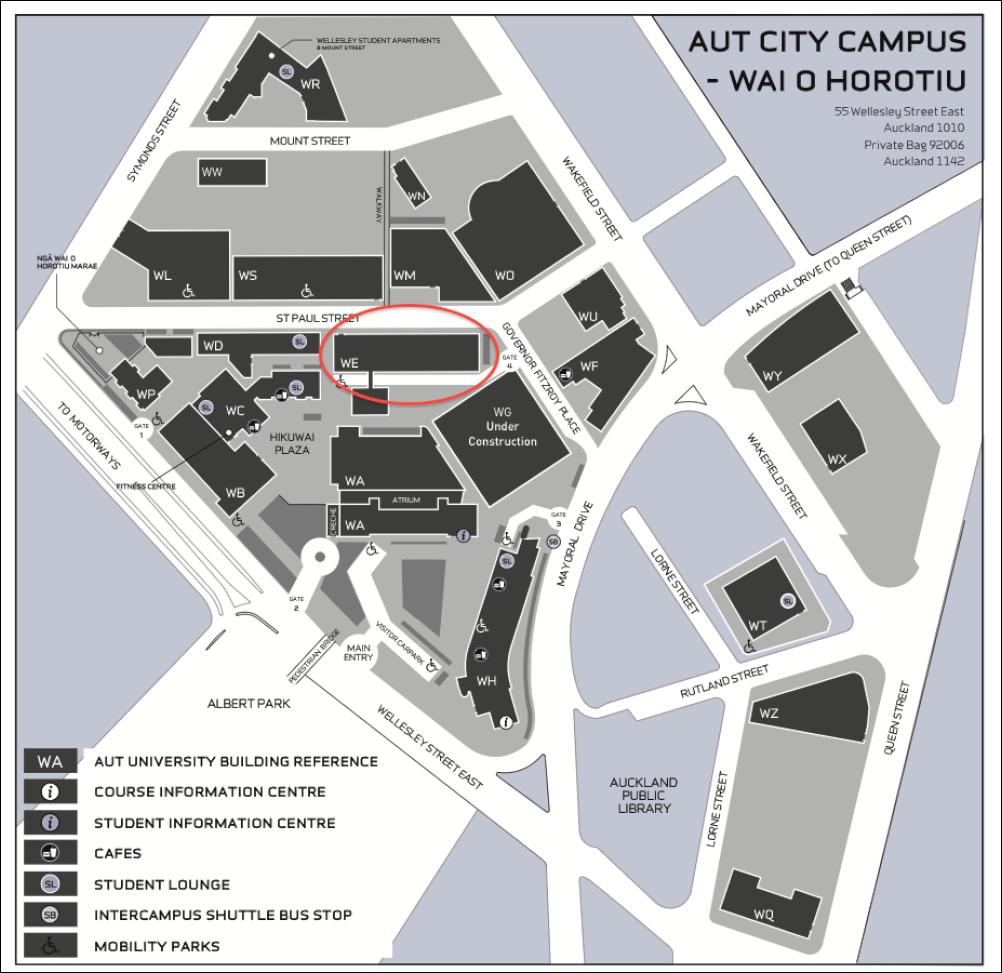
Where: AUT University lecture theatre – WE230, Wellesley Campus, Auckland

When: Friday, February 12, 5pm to 6.30pm.


Click here for an AUT campus map showing the location of the lecture.

More background information at Pacific Scoop.