Showing posts with label china. Show all posts

Wednesday, October 13, 2010

A stint at the China Daily Online

Michele Ong, AUT journalism graduate working for the Rodney Times, spent three months in China earlier this year on an AUT University-China Daily Exchange Internship organised by AUT's Pacific Media Centre with Asia:NZ Foundation funding for air travel at the online arm of China’s national English newspaper, China Daily.com.cn. Here are some of her experiences and tips she shared on her return.

I WENT to Beijing in April 2010 - by then I had already been working for the Rodney Times for three months, but my editor was very supportive of me and granted me three months off.

The organisation is comprised of the newspaper, China Daily, and the website, ChinaDaily.com.cn. Both are independent of each other in terms of operation but share the same masthead. I worked as a copy-editor for the website’s travel and culture department.

I had an amazing experience working in Beijing—I definitely enjoyed my time there.

Working for the website’s travel department, I spent my days editing travel brochures and cultural stories. Although it sounds cushy, the reality of it is quite different. The brochures were often many pages long (I once edited a 16-page long article on Anhui province which took me a good three days. I later discovered it was bound, printed and distributed to visitors).

The brochures were also often translated into English from Mandarin by a freelance translator or someone who works for the local government tour board. So deciphering the sentences can sometimes be a major challenge as well as a huge test of patience. I did the best I could with those stories.

But what I’ve learnt is as long as you are enthusiastic, polite and willing to learn, the local colleagues are more than happy to help you understand the mumbo-jumbo that’s in front of you. It can be tempting at times to just do a “whatever” job in editing the pieces—after all, it’s not like they are none the wiser, right? Wrong. I checked with a local colleague and he told me they can sort of tell if you’ve put any effort into editing the stories.

Sometimes you’d have the reporters coming back to you asking about the changes you’d made to their work. The thing to remember is, they are not undermining your work, but they are just keen to learn. If I was not pressed for time, I would explain to them the changes that I’d made. They were usually very grateful for any input.

Travelling to Anhui
During my internship, I was very fortunate to be given the opportunity to travel to Anhui province with a local colleague. Anhui’s local tourism board had just launched a campaign to promote tourism in their city and was keen to have two China Daily reporters do a write-up.

The board sponsored me and my colleague’s accommodation and food. The local tourism board put us up in a fancy hotel by Shanghai’s The Bund before arranging a two-day tour for us at Anhui, where we climbed Huangshan Mountain and visited an ancient town. My job was to do a write-up of the trip. It can be found here.

Although it was a very tiring week, with lots of late nights (I was basically my colleague’s editor on demand. She would write the story and have me edit it before sending it back to the website), early mornings and crazy long hours on the road (I counted I had spent at least 33 hours on the road in just a week), it was definitely one of my highlights working with China Daily.

When I whined to my local friend about my five hour bus trip from Huangshan Mt to Hefei, capital of Anhui, followed by a 12-hour ride from Hefei back to Beijing (all on the same day), he said “You’re now travelling like a local!”.

Living in Beijing
My work hours were 8.30pm till 5.30pm with an hour’s lunch break. I was given an allowance of 2000 yuan a month (NZD400). I was given an apartment at the newspaper’s compound.

Because I was a “foreign expert” I had the whole apartment, fully furnished, to myself (I even got the newspaper delivered to my room every morning. It’s unbelievable). It got a bit lonely at times, going home to an empty apartment but I can’t complain because it beats having to share it with a stranger. I didn’t have to pay for rent, although I did have to pay for utilities which were a flat rate of 300 yuan a month (NZD60). If you’re too caught up in other work to sweep and mop your apartment (Beijing is one very dusty city), for 50 kuai (NZD10) you can get the apartment service lady to come and tidy your apartment for you.

As for my meals, I initially had my breakfast, lunch and dinner at the newspaper’s canteen but I soon got bored with it and would only have lunches there with my colleagues. Canteen food costs on average eight yuan (approx NZD 2.50) for rice and two meat/vegetable options.

I found my three month stint at Beijing to be a bit short, although I’m sure my editor would dispute this. At times I found the Chinese capital overwhelming with its traffic jams and its crowds (people everywhere!) but I soon got used to it. It took me about a month to get used to the work environment and find my way around Beijing using the subway.

Tips for surviving in Beijing:
• Learn basic Chinese. I majored in Chinese when I was at university, so I can understand and speak the language, even if I’m not very fluent for lack of practice. However, basic knowledge of Chinese will be an advantage. If all fails, have an English-Chinese app loaded on to your iPhone, a complete life saver.

• Make contact with the intern who went before you. I got in touch with Guanny Liu who went in 2009.

• Do make friends with the locals. I found them to be very friendly and helpful. They helped me settle down and even took me to out during the weekends to popular tourist spots.

• Do make friends with the foreigners, because sometimes you just want to have some good old burger and fries.

• Do bring some food (optional) such as longlife milk, Milo, chocolates, biscuits… your favourite foods basically. You don’t want to be left out in the cold should homesickness strike.

• Do pack medication such as Panadol, cough drops, cold/flu and diarrhoea tablets.

• Do notify New Zealand Embassy you’re heading to Beijing.

• Go with an open mind and have fun

Pictures: Top: Michele Ong in news presenting mode with colleagues at the China Daily Online (Photo: David Robie); Michele in assignment in Anhui (Photo: Michele Ong); and a China Daily editorial conference (Photo: David Robie).

AUT's School of Communication Studies Asia-Pacific internships organised by the Pacific Media Centre with support by the Asia: NZ Foundation

Pacific Media Centre's Facebook for internship students

Kristina Koveshnikova's updated AUT 'survival kit' for Beijing.

Friday, July 16, 2010

PMC director calls for greater global outreach by NZ j-schools

Pacific Media Centre

New Zealand journalism schools need to be far more internationally minded and think outside the parochial square, says Pacific Media Centre director David Robie.

Just back from a six-week sabbatical trip to several Asian countries and Europe, Dr Robie says many New Zealand journalism graduates are doing well in countries such as China while pursuing an international career.

The PMC at AUT University has promoted a postgraduate internship programme with support from the Asia New Zealand Foundation for the past seven years and several graduates have used this as a springboard for a global career.

“New Zealand’s future lies in the Asia-Pacific region with an emphasis on Asia, especially China, our second largest trading partner,” he says. “Journalism courses here need to reflect that.

“Long gone are the days when journalism graduates saw the New Zealand media as their sole job market.”

AUT’s School of Communication Studies launched New Zealand’s first Asia-Pacific or international journalism paper in 2007 and Associate Professor Robie teaches the course.

During his sabbatical trip, Dr Robie visited the Communications University of China with AUT’s international relations director Chris Hawley; China Daily, the major state-run English newspaper and website where AUT graduates go on regular internships as foreign “experts” for copy polishing; a leading Hongkong university-based journalism school; Asian Media Information and Communication Centre (AMIC) in Singapore; Airlangga University’s communications school and the Jawa Pos news media network headquarters in Surabaya, Indonesia; Reporters San Frontières media freedom group in Paris; and the International Herald Tribune’s Asian bureau in Hongkong among other media and educational centres.

Internship strategy
In Beijing, he had discussions with the China Daily management about a strategy to boost AUT’s exchange scheme and improvements for the internship scheme.

He also met current intern Michele Ong and a former intern, Guanny Liu, who now works with a Beijing-based international radio station.

“The internship changed my life,” said Liu, who had been working for Radio New Zealand and worked on a China Daily internship after graduation before landing the Beijing job.

Both Ong and Liu speak Mandarin. Ong has just returned from a Shanghai Expo assignment and a travel reporting mission in Anhui province.

In Surabaya, Dr Robie gave a lecture to Airlangga media students about Asia-Pacific press freedom and comparisons between micro-island states and the Indonesian news industry environment.

Airlangaa postgraduate students have studied at AUT and a closer relationship between the two universities is being developed.

In Paris, Dr Robie met with Reporters Sans Frontières Asia-Pacific researcher Vincent Brossel and discussed plans for stronger South Pacific collaboration with the Pacific Media Centre, which operates the regional media monitoring project Pacific Media Watch and the news website Pacific Scoop.

Pictures: Top to bottom. Airlangga students in Surabaya, Indonesia, welcome David Robie; Michele Ong at the China Daily video newsreading desk; Beijing dinner - left to right (back): Michele Ong, Guanny Liu, Del Abcede and Bridgid Hawley, front: David Robie, "chairman" Chris Hawley and Ollie Fenwick-Ross; China Daily's 29th anniversary celebrations; a news conference at the China Daily; and David Robie with Jawa Pos editor Leak Kustiya. Photos: David Robie

Internship journo discovers the essence of China

By Michele Ong in Beijing: Pacific Media Centre

It was in Anhui that I both truly experienced and saw China.

Anhui province, with its stunning Huangshan mountain and beautiful old towns, was what I pictured China to be based on the movies I've watched and the books I've read.

I first glimpsed Huangshan Mountain at the photo exhibition put out by respected artist Wang Wusheng at the opening ceremony of “Memorable Tourism Anhui”. I was captivated by the mountain’s beauty the moment I saw the pictures.

By the end of the day, I was burning with curiosity at what Huangshan mountain really looked like in real life.

I visited Huangshan on my first day in Anhui. Truth be told, I was completely exhausted from my seven-hour bus journey the night before from Shanghai to Anhui and would happily trade climbing up Huangshan mountain if I could lie in bed a little longer.

Alas! We were to get up at 7am and be ready for the long day ahead by 8am.

On our way up to the mountain, we were given a brief introduction by our tour guide, Jeff, on Huangshan.

The mountain got its name from an emperor from the Qing Dynasty who spent his time studying the art of becoming a fairy.

Emperor's peak
After much persistence, he eventually attained fairydom. The local villagers, out of respect for their emperor, named the mountain Huangshan. Jeff then explained that “Huang di” means “emperor” in Mandarin. Huangshan Mountain loosely translates to Yellow Mountain.

I found climbing Huangshan mountain no means an easy feat. With every step I took, I felt like there was a ball chain attached to my ankles. Yet before me lay a series of never ending steps, beckoning me to climb further up, enticing me every step of the way with its lush greenery.

I felt pretty embarrassed with myself for complaining about sore calf muscles when I saw several men, strong as ox, balancing either a ton of bricks or sacks of food on their shoulders, hiking steadfastly up the mountain. All I had on me was a small satchel containing a bottle of water, a packet of crisps and an umbrella. Yet there I am griping about my sore legs.

By the time I reached its highest peak, Lotus Peak, I wasn’t sure if my legs were still with me. The last time I did any exercise was when I was still in New Zealand—I swam once a week. But ever since I came to China, all I did was eat 24/7 a day and did minimal exercise.

Despite complaining and huffing and puffing while making my way up the mountain, I had to say I had no regrets. I would’ve regretted it more if I gave up half way and made my way back to the cable car.

The mountain with its beautiful greenery and thousands of years old pine trees, growing gracefully between majestic rocks, were breathtaking.

The mountain air was both cool and refreshing.

Praying for blessings
Low lying clouds enveloped the mountain's peaks and trees, lending a calm and serene atmosphere. I could feel my earthly worries slowly disappearing as I stood in awe of the beauty before me. Little wonder its local tour brochure boasts its mountains as "the best places to go when praying for blessings".

Along my way up the mountain, I took the chance to slowly admire flowers and trees which grew in abundance. Whenever I’d start feeling a little bit tired from the climb, I’d rest a little while by the streams and watch crystal clear water gush over smooth brown rocks. There were times I wish I could set camp there. Then I’d get to admire its scenery all day long.

I wasn’t the only one who thought Huangshan mountain a beauty. Another visitor I spoke to, Andee Flueck, a Swiss working in Germany, said he found the mountain "mystical”.

An Italian tourist, Arianna Padella, told me that unless one moved outside from the city, one would never be able to appreciate what the country is like. I couldn’t have agreed more with both of them.

I’m currently working in Beijing and as much as I love the city for its tall modern buildings and vibrant nightlife, it still wasn’t really the China I was hoping to experience.

But now I could safely say I have truly experienced the essence of China in Anhui.

Michele Ong is an AUT University graduate journalist on an AUT and Pacific Media Centre internship with the China Daily in Beijing with airfare support from the Asia New Zealand Foundation. This story was first published on the China Daily travel website.

Other Michele Ong stories:
Ancient villages in Anhui
NZ's gaokao exams

Wednesday, February 3, 2010

Buchanan to speak on Pacific geopolitics at PMC

Pacific Media Centre

International relations and security analyst Dr Paul Buchanan is returning to New Zealand for a month and will deliver a public lecture focusing on South East Asia and South Pacific geopolitics and security.

The lecture is open to the public and is hosted by AUT University’s Pacific Media Centre.

Most recently a Visiting Associate Professor at the National University of Singapore, Dr Buchanan was one of New Zealand’s most recognised experts on international affairs prior to his departure overseas on extended research leave in 2007.

While in New Zealand, Dr Buchanan will be researching New Zealand security policies after 1990 as part of his book project titled Security Politics in Peripheral Democracies.

Dr Buchanan will also be offering a lecture on Western Pacific geopolitics hosted by the Pacific Media Centre where he will focus on South-East Asia and the South Pacific through the lens of US-China competition in the region. He will also host a series of informal discussions on contemporary international issues with interested parties in Auckland and Wellington.

Public Lecture: AUT University, Pacific Media Centre, All Welcome
Title: Democratic Fragility, Authoritarian Persistence and Strategic Competition in the Western Pacific Rim

Topic: SE Asia and the South Pacific through the lens of US China competition in the region

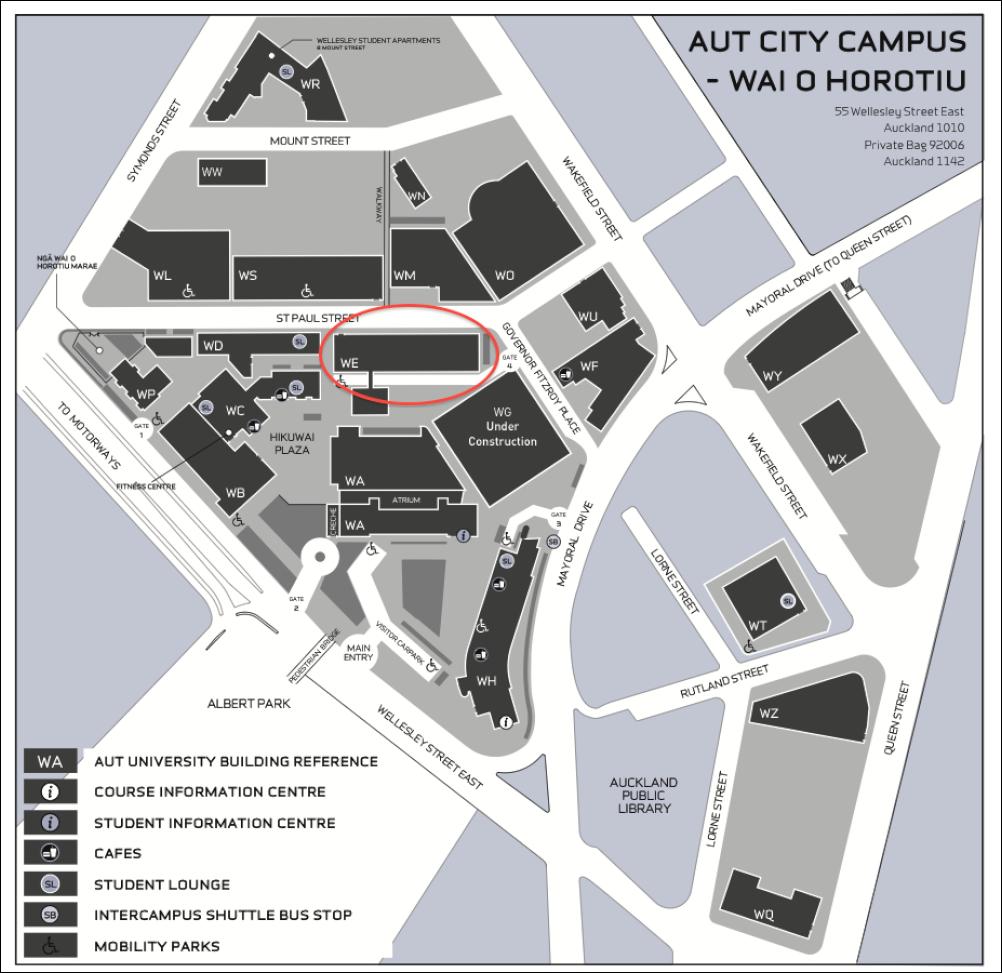
Where: AUT University lecture theatre – WE230, Wellesley Campus, Auckland

When: Friday, February 12, 5pm to 6.30pm.


Click here for an AUT campus map showing the location of the lecture.

More background information at Pacific Scoop.

Tuesday, May 26, 2009

Chinese community leaders split on Dalai Lama's planned visit to NZ

A news media report about a Chinese community bid to have New Zealand block a visa for the Buddhist spiritual leader Dalai Lama has stirred controversy. Critics condemn what the see as a derogatory attack.

By Christopher Adams: Pacific Media Centre


Chinese community leaders are split over the planned visit by the Buddhist spiritual leader Dalai Lama to visit New Zealand at the end of the year and some want the trip called off.

Several leaders are also annoyed with some media coverage, including a New Zealand Herald story last month that revealed the United Chinese Association of Auckland was planning to send a protest letter to the Government asking for the Dalai Lama to be refused a visa.

Steven Wong, president of the UCA, was quoted in the Herald story as saying: “The Dalai Lama is just a stirrer and everywhere he goes, he spreads lies and destroys relationships.”

Wong, who migrated from the Canton region of China to New Zealand in 1975, is disappointed with the story, and claims the reporter who wrote it, Lincoln Tan, misquoted him.

“I never said he [the Dalai Lama] spreads lies,” he says. “How can I say he is a liar? If I said that he could sue me.”

Tan maintains that Steven Wong made the statement, and believes he is now denying the comments because, in retrospect, he regrets them.

“He definitely said it,” says Tan.

But Wong, although he denies making the statement quoted by Tan, does believe the Dalai Lama’s visit will be detrimental to the bonds between the New Zealand and Chinese Governments.

According to a statement given by a National Party spokesman to the New Zealand Herald, a meeting between Prime Minister John Key and the Dalai Lama may take place during the religious leader’s visit to New Zealand in December.

Such a meeting would resume New Zealand’s official relations with the exiled Tibetan, after Helen Clark refused to meet him on previous visits.

Affect relationship
“If the Dalai Lama comes and meets John Key it will affect the relationship between New Zealand and China,” says Wong.

Wong warns that the same could happen in New Zealand as in France last December, when a meeting between French President Nicholas Sarkozy and the spiritual leader incensed the Chinese government.

The meeting resulted in Beijing scrapping an EU-China summit that France was set to host.

The business relationship that exists between New Zealand and China, especially the Free Trade Agreement signed in April 2008, is beneficial for both countries, says Wong.

But he adds that he is not concerned about the Dalai Lama’s visit because of his own business interests, as the potato chip factory he owns in East Tamaki is not currently exporting its products to China.

“Most Chinese migrants don’t want the Dalai Lama to come,” says Wong.

Thuten Kesang, chairman of the New Zealand Friends of Tibet organisation, is also unhappy with the Herald story, which Lincoln Tan also interviewed him for.

“My personal belief [about the story] is that Lincoln Tan should have reported more deeply,” says Kesang. “Lincoln should have backed up Steven Wong’s comments about his holiness [the Dalai Lama].

He says asking the government to not to issue a visa is fine, but being derogatory about the spiritual leader is not.

Kesang, who was born in the Tibetan capital of Lhasa, says Steven Wong should have known better than to make the comments.

“He is living in a democracy – it’s not China,” he says.

Negative stance
Kesang believes it is the business interests of people involved with the United Chinese Association that has lead them to take a negative stance against the Dalai Lama.

“The United Chinese Association would be Chinese migrants from mainland China who are heavily involved in the import/export business. Therefore, they feel they need to be the mouthpiece of the Chinese government in order to get favours and good business relations with China.”

The Chinese Communist Party is currently placing a lot of emphasis on the Dalai Lama’s travel plans, says Kesang.

Kesang adds that the Chinese government had its first success recently when the South African government refused the Dalai Lama a visa to visit the country and speak.

“I think countries shouldn’t get away with this,” says Kesang. “Trade is fine, but China doesn’t have the right to dictate what other countries do. No country should trade human rights for economics.”

However, Kesang is certain the New Zealand government will never refuse the Dalai Lama a visa to visit the country.

“I am 100 percent sure the New Zealand government won’t refuse a Nobel Laureate a visa,” he says. “New Zealanders love their freedom too much to be dictated to.”

Kesang is pleased with the prospect of the Dalai Lama having a meeting with John Key during his visit.

Both of Kesang’s parents died as a result of the Chinese occupation of Tibet, he says.

“My father died in Chinese prison and my mother of starvation.”

Contrasting view
Jim He, secretary-general of the United Chinese Association, has a different stance to Wong over the Dalai Lama’s visit.

“In my opinion, the Dalai Lama can come, but his trip is just to emphasise his own views on the Tibet issue.”

But he adds that, as a group, the UCA doesn’t support the Tibetan religious leader.

“We think of China as one country and Tibet has been a part of China since hundreds of years ago.” he says. “The Dalai Lama just spreads propaganda.”

He, who is originally from Beijing and came to New Zealand in 1988, believes the Chinese occupation has been positive for Tibet.

“Look at the current economy,” says He. “The central government has injected billions of dollars into Tibet.”

Simon Harrison, secretary of the Dalai Lama Visit Trust, was disturbed by Wong’s comments reported in the Herald story.

“The comments that were made were outrageous, particularly about the Dalai Lama,” says Harrison.

“We have no problem recognising trade relations, but it [the Dalai Lama’s visit] is just the result of an invitation by the New Zealand people.”

Harrison adds that Chinese nationals are often keen to uphold the line their government takes on issues such as Tibet, especially when they find themselves living outside China.

Propaganda line
Referring to the commonly held Chinese belief that Tibet has always been a part of their country, he says: “The propaganda in that line is often false, historically. I would be happy to engage in discussions with these groups in order to clear up some of the historical confusions.”

Harrison hopes that a meeting will take place between the Dalai Lama and the Prime Minister during his New Zealand visit.

“It is very important that some kind of symbolic gesture is made,” he says.

The Dalia Lama is scheduled to speak at Auckland’s Vector Arena on December 6.

Christopher Adams is a Graduate Diploma in Journalism student on the Asia-Pacific Journalism course at AUT University. Credit: The photo of the Dalai Lama is from the Australian National University.

Chinese seek to ban Dalai Lama from NZ

Monday, May 25, 2009

Fiji media risks ending up like Chinese press, says academic

Chinese language media in New Zealand relies heavily on free content from mainland China's media and is “importing the propaganda line to Chinese-language discourse in New Zealand”.

By Steve Chae: Pacific Media Centre


Fiji’s media is at risk of becoming like the Chinese press with an authoritarian model under the censorship regime, says a New Zealand journalism academic.

“In the West, the media’s role is mainly seen as a watchdog. In Fiji, the traditionally western-style media is now under threat from a military regime that doesn’t want to accept independent news in a country that is very diverse ethnically and religion,” says Pacific Media Centre director associate professor David Robie.

“The cultural complexities in Fiji are such that many in people in the country believe there should be nation-building media.”

While the majority of the population of 940,000 are indigenous Fijian (54 percent), there is a 37 percent Indo-Fijian minority and other races. The country’s dominant religion is Methodist, but among the Indo-Fijians, a majority is Hindu without about a third Muslim.

China has growing economic and political influence in Fiji since the December 2006 coup. Fiji imposed draconian censorship on April 10.

Ranjit Singh, former publisher of Fiji Daily Post and now chief reporter of the Indian Weekender in New Zealand, says: “Fiji never had democracy but the problem arises from pushing the Western concept of democracy”.

“It’s a first world solution to a third world country,” he says.

“That does not help to understand the complexities of the Fiji issue. The issue is not black and white. It’s got shades of grey.”

Dr Robie says the Fiji media is expected by many people to help solidify national identity.

“The Chinese media has parallels with Fiji in that their journalists are also trying to find a space within the authoritarian media,” he says.

“But the New Zealand media reacts with shock and horror at the lack of plurality of ideas in these media.”

Propaganda machines
A Press article reports how the Chinese government propaganda machines work in a two-pronged strategy aimed at Chinese people at home and also abroad.

Dr Anne-Marie Brady says Chinese people in New Zealand are affected by the Chinese propaganda focused on those living overseas.

An associate professor at the University of Canterbury’s School of Political and Social Sciences, Dr Brady gave a talk on the operations of Chinese propaganda to the US Security Commission in Washington last month.

She says the Chinese language media in New Zealand relies heavily on free content from the Chinese media and is important – “especially to new migrants to New Zealand”.

This is “importing the propaganda line to Chinese-language discourse in New Zealand”.

David Soh, publisher of the Mandarin Times, says 80 percent of his readers are native speakers who are born and raised in China.

He says new migrants to New Zealand feel a sense of belonging to China but accept they are citizens of a new country.

The paper makes subscriptions to Xinhua news agency in China but also fills its pages daily with translations of New Zealand news.

Soh says he is free to report on anything he likes and will respond with criticism on things that are happening in China.

Tibet divisive
Last year’s Tibet incident was sensitive and had “quite a divisive effect” within the Chinese community, whereas the Sichuan earthquake was emotional and reached a common feeling.

He says he does not promote things that are illegal in China such as the Falun Gong practitioners but accepts they are legal in New Zealand.

Asked about Fiji, Soh says it is “a different world where law and order is not good at the moment”.

Hewitt Wang, editor of Skykiwi.com, says the media he works for is a New Zealand media and presents the opinions of Chinese community in New Zealand.

“We accept all the opinions from worldwide media - not just the Chinese media,” he says.

Ethnic community media should be publishing all views, including the Chinese propaganda.

“Propaganda depends on how you define it. I like to think of it in a positive way,” says Wang.

Dr Robie says propaganda is “uncontested information which can be plain wrong, or disinformation calculated to achieve a manipulated mindset”.

“With competing media, the truth will emerge somewhere down the track. When government imposes news values, that single view becomes propaganda,” he says.

Language ability
Virginia Chong, vice-president of the New Zealand Chinese Association, says she does not read Chinese language media in New Zealand because she has lost the language ability having been born here.

Chong says international students can become influenced by the Chinese language media here.

“Every country puts out spin and everybody has their own impression on those things,” she says.

Dr Robie says Chinese language media in New Zealand has not yet made a transition from being a media “enclave from China to culturally based media in New Zealand”.

“It will evolve in the future when Chinese media will become a lot more integrated within New Zealand society,” he says.

He also says the New Zealand mainstream media make judgments of other media through “cultural lens” and this could also be a form of propaganda.

Singh says there is biased reporting of the Fiji issue in New Zealand in that only negative stories are played.

But within the community media in New Zealand, he says he would like to “put a positive spin on Fiji”, referring to the Indian Weekender which covers Indian diaspora news, including Fiji.

He says journalists in Fiji can be better educated on how to report for Fiji.

“The political situation now can be partially blamed on the Fiji media,” he says.

Behind the story
“As journalists we really need to see the story behind the issue and investigate these things,” says Singh.

Dr Robie says: “The harm caused to Fiji is already very great.”

He blames New Zealand foreign policies for its “short sightedness” since December 2006.

“The situation in the Pacific is now quite volatile,” he says.

“New Zealand has been like a big brother to Fiji as we pride ourselves as a being part of Pacific.

We now have to report these stories better with more depth and more comprehensively,” says Dr Robie.

Steve Chae is a Graduate Diploma in Journalism student on the Asia-Pacific Journalism course at AUT University. Pictured: Pro-Chinese rally in Aotea Square, Auckland.

NZ expert tells of Chinese propaganda

Saturday, May 23, 2009

Cooking Chinese dishes for dummies

By Kristina Koveshnikova: Pacific Media Centre

China Daily has held its very first cooking classes for foreigners.

Lessons in preparing traditional Chinese cuisine were offered at the Yosemite village in Shunyi district, Beijing.

Chinese people enjoy good food and take pride in their famous dishes. Over the centuries cooking has developed into a very sophisticated art, with several types of dishes from north to south and east to west.

Chinese cuisine has become widespread in many other parts of the world, from Canada and America to as far as New Zealand.

The art of Chinese cooking is not at all difficult and anyone can learn how to make traditional Chinese dishes.

Chefs from a local restaurant were invited by China Daily to teach foreigners how to make popular Chinese dishes like spring rolls, kunpo chicken and dumplings.

Dozens of people from over seven different countries came along. Some even brought the whole family to the event.

After each cooking demonstration, guests had the opportunity to prepare the dishes themselves, using the skills they had just learned.

The dumplings seemed to be the hardest dish to prepare among the three,coming out in all sorts of different shapes and sizes.

But all the foreigners at the event agreed Chinese food is a lot easier to cook than it may appear.

So anyone can master it.

Happy cooking!

Pictured: Kristina (centre) takes a turn at Chinese cooking in Beijing (China Daily).

Kristina Koveshnikova is an AUT graduate journalist who is on a Pacific Media Centre internship with the China Daily sponsored by the Asia New Zealand Foundation.

Cooking Chinese dishes for dummies [video]

Thursday, March 5, 2009

PMC welcomes Asian media pair for studies

By Josephine Latu: Pacific Media Centre

Two Asian journalists – from very diverse backgrounds – were welcomed by Dr Alan Cocker, head of AUT’s School of Communication Studies, in a cosy ceremony at the Pacific Media Centre today.

Wang Nan, 28, from China, and Violet Cho, 25, an indigenous Karen from Burma, will be attached to the centre while they pursue postgraduate studies at AUT.

Wang is a cultural affairs editor for China Daily.com and is on a semester-long exchange internship.

The Beijing native holds a degree in English language and literature, and counts painting and photography among her creative interests.

Her attitude reflects the mutual benefits of cultural exchange.

“If people want to know about Chinese culture and custom, I am happy to share my knowledge and work,” she said.

“But I also want to learn new things. Some of the paper courses I’m taking – like photography and design – I’ve never touched before.”

Her colleague, Cho, who writes for Irrawaddy magazine, is more interested in raising awareness about the challenges of her homeland as well as the Burmese community in New Zealand.

“It’s impossible for a people outside of a country to know what it’s really like in another society,” she said.

Cho’s childhood was spent moving between refugee camps, fleeing to Thailand because of the threats her family faced from the military due to her father’s involvement in the Karen National Union (KNU).

Now living in exile because of her activism and “dissident” reporting, Cho is this year’s inaugural winner of PMC’s Asian Journalism Fellowship. She hopes her BCS (Hons) degree will help her produce more critical media about Burmese issues.

“We can build networks and maybe help each other achieve some of our aims in activism,” she said.

At the welcome ceremony, both Cho and Wang were garlanded with traditional lei flowers and presented with AUT tee shirts.

Cho thanked Dr Cocker, PMC director Dr David Robie and the sponsoring Asia New Zealand Foundation for the “tireless efforts” in getting her to New Zealand.

Pictured: Top: Violet Cho (left) and Wang Nan at the welcome. Above: Cho, Wang and Dr Robie. Photo: Alan Koon.

China Daily
Irrawaddy
Asia New Zealand Foundation

Saturday, February 21, 2009

China Daily online editor joins AUT on exchange

Staff reporter: Pacific Media Centre

A China Daily online editor arrived in Auckland, New Zealand, today on a semester-long exchange study internship with AUT University's School of Communication Studies.

Beijing-born Wang Nan, 28, a cultural affairs editor on China Daily.com's culture website also assists the chief editor.

"My job is to introduce China’s beautiful places which are worth a visit and to profile delicious Chinese food, people’s lives and many interesting things," she says.

"If you want to know more about common Chinese young people’s life, just ask me - don't hesitate!"

For five years, graduate journalists from AUT have worked on three-month internships on the China Daily's websites and several have gone on to full time jobs with Chinese media or news organisations elsewhere in Asia.

In return, AUT has hosted China Daily staff on exchange, mostly in the Business Faculty.

Wang is the first China Daily staff person to join the School of Communication Studies and she will be attached with the AUT Pacific Media Centre during her stay in New Zealand.

Her family name Wang means “king” in the Putonghua language and Nan is a variety of tree and represents good health.

She has worked with several AUT journalism graduates in Beijing and she found the most recent internee, Cameron Broadhurst - who also did an internship with the Jakarta Daily Post in 2007 - the most helpful.

"Cameron gave me much help for my trip to Auckland and he told me he was sure it would be a great adventure for me. I look forward to it."

While at AUT, Wang - who holds a BA degree in English language and literature from Beijing International Studies University - will be doing a series of design and media papers.

Her chief interests include painting and photography.

China Daily
China Daily culture
Pacific Media Centre
AUT international journalism internships

Friday, February 20, 2009

China's tumultuous year

By Cameron Broadhurst: Pacific Media Centre


After 30 years of reform, the world is feeling the effects of China opening up, especially when one momentous event after another in 2008 brought change that could shape the giant’s identity for years to come.

Early in 2008 were the Tibetan riots and torch protests. They were overshadowed by the Sichuan earthquake. The Olympics followed, then the milk scandal and now the financial crisis. It was the year China extolled its “30 Years of Reform” since Deng Xiaoping opened up the country in 1978; fittingly it was a year that showed that the events that matter now in China are those shared by and affecting the rest of the world.


Beijing spent seven years preparing for the Olympics, and the common sentiment was they were a defining moment for China. Yet just months later, other events have surpassed their significance.


The election of Barack Obama to the US presidency has been followed and even cheered on by many of China’s urban youth, though others fear a new protectionism and his calls for the yuan to be revalued.


Otherwise Obama’s official policy on Taiwan and other issues remains little changed from the Bush administration. But how Obama handles the financial situation will of course affect China.

The economic crisis
China’s domestic response to the world crisis has been a massive “Chinese New Deal”: 4 trillion yuan (US$586 billion) in government funds to kickstart domestic spending. The money largely covers targeting housing and state infrastructure but also includes funds for R&D and environmental protection.


At the same time, the central bank’s slashing of interest rates in November showed a country edging closer to its a new role as a player and manager of the international economy.


When US and European banks began failing in October, state media reports on Chinese banks’ solidity held confidence, but a country heavily reliant on exports for growth could never be immune. As investment from overseas dried up and key export markets slowed, the Chinese economy has been left hurting.


Across the provinces, firms and factories have been hitting the wall, from toy manufacturers to online video companies. By late 2008 thousands of workers were leaving Guangdong daily, as job vacancies in the Pearl River Delta topped 2 million.


During the Economic Forum in Davos, the international monetary elite came out asking China to “have a voice as well as a wallet”, and take a role in making regulations on international capital. That followed close channels of US–China communication at the time of the US bailout, due to China’s massive foreign reserves of US$1.8 trillion.


You Nuo, a journalist at the state-owned newspaper China Daily, says he looks forward to a future where Chinese monetary policy, with its heavy government hand, comes more in line with what he wryly calls the rest of the world’s new financial socialism.


There remains debate over just how stable China will be. But Richard Balme, a professor of politics at Tsinghua University, says if China remains strong, it could gain international standing.


“If the Chinese economy proves to be robust they will come out strong from this,” he says. “So far China has appeared as a stabilizing factor. If confirmed, this would give more strength to its economic policies and influence. And it will benefit its relations with foreign countries.”


With new fuel taxes and oil price reforms, the government is trying to steer China towards higher domestic demand to fill the export gap, not an easy shift to make and one the world is watching with anticipation.


While financial woes may be China’s major worry now, the past half year has seen ample other opportunities for China watchers to examine its progress in the world community.

The Olympic Games and China’s space walk
The Games are over, yet their legacy remains. A European diplomat working in Beijing, who asked not to be named, describes the Beijing Olympics as “an undoubted success by every measure”. He believes the Communist Party’s perception of the political risk of international attention (such as to human rights) increased as the event grew closer, leading to nervousness by internationalists in the party over a possible backlash from more inward-looking factions.


Such nervousness may explain the dramatic measures to close down large gatherings in the lead-up to the event.


“The Games will have been a great relief. It was also a success in reinforcing the party’s claim to legitimacy in running the country,” he says. “It was very well managed in strengthening the party’s claim to the mantle of power. That was the stabilizing influence of the Games.”


Shortly after the Games finished, and timed as if to continue the triumphant China theme, millions watched as a Chinese astronaut performed the country’s first space walk, shaking a red flag out in the solar void. Experts and commentators lauded the great technical achievement, another step toward a Chinese space station within four years, and ultimately a moon landing.


Journalist You believes people did not really care a great deal about the space walk, but were and are more concerned about keeping the GDP at 10 percent. More important, and undermining the hype of progress, was the milk scandal.

Milk and melamine
Infant deaths and thousands of sick babies across the country were shocking enough to Chinese mothers, but nations around Asia were also forced to test for foods when it became known some Chinese milk powder was laced with melamine.


A number of people took the blame for mistakes, including the head of the General Administration of Quality Supervision, Inspection and Quarantine (AQSIQ, China’s food and health safety department). Figures for infants affected have now reached six deaths, and 294,000 sickened. Compensation will be up to US$29,000 per family.


But despite months of clues since early 2008, the whole scandal broke conveniently only as the Paralympics was drawing to a close. The eventual scale of it may have taken the government by surprise.


“AQSIQ is not working and has never worked,” says You. “The milk crisis is not going away, because we’re waiting for new standards in that industry.”


While a new ‘preemptive’ food monitoring system was being introduced to promote prevention instead of crackdowns after the fact, food problems continued. Melamine was found in eggs in Hong Kong, and formaldehyde in whitebait. In late December authorities began investigating melamine in tableware as well.


“The scandal is a reminder of the problems we’ve always known,” says the diplomat. “But at the same time after the Games there was less schadenfreude and a higher stock of world sympathy for China than with the toy problem.”


The real problem, he suggests, is threefold. First, regional branches of the government are not funded properly so seek revenues locally, creating a tendency for them to be in the pockets of the people they are regulating.


Second, fiscal policy, made in Beijing, attempts to deal with food prices through price controls.


The third problem is the weakness of the press and its connection to large companies. As many have noted, it is customary in China that either there is no problem at all, or a crisis so serious that it overwhelms the system. A controlled media and lack of independence in monitoring systems means problems are rarely exposed early.


For media, the after-effects of the Games have turned. Foreign journalists’ license to interview at will was been made permanent, (though no such allowance is granted Chinese journalists).


But since the games, major news outlets and foreign websites that were penetrating ‘the Great Firewall’ have now again been curtailed, as censors moved to block previously accessible ‘sensitive content’ after the world’s gaze had moved on.

Behind closed doors
Other events in China attract less attention, but may be even more significant. New land reforms could transform the future of property in China. Basic land rights for rural residents, previously held only by city dwellers, were created in October’s Communist Party Committee Congress, enabling peasants to rent out their plots and protecting them from land grabs by developers.


Beijing sees the reforms as critical to lifting Chinese peasants (there are about 700 million of them) out of poverty and stimulating domestic demand to combat the export crisis. Connected to the push for more rights are the problems of the Chinese labor force, which remains tied by a permit system to their origin – construction workers, for example, were sent packing once they had built Beijing for the Olympics.


Balme says other important changes to Chinese law are being made without public awareness, and he cites the review of death penalty cases and the reform of arbitrary detention.


“Small steps, but the direction is there,” he says. “Chinese authorities are open to dialogue and borrowing from foreign expertise.”


Among the human rights dilemmas, Tibet holds little chance of any political change. Balme says that since the Olympics, China has come to understand the EU is critical of its human rights position, without accepting it, and there is major difficulty in European influence forcing the Chinese to change against their will.


President Sarkozy’s decision to meet with the Dalai Lama in December outraged the Chinese government, who cancelled an EU summit because of it. The French president is becoming an unpopular figure in China, and an easy target for the nationalistic rage that the government encourages to deflect anger from itself.


China is also still eager to hold onto its developing country status, wanting to benefit from it in forums, trade and climate change talks. In one recent radio interview, Wen Jiabao corrected an interviewer who described the country as a new great power. “We are on the way to becoming a moderately prosperous socialist economy,” he said.


A main thrust of foreign policy and public announcements is combating the story that China’s rise is a threat. China’s Asian partners, such as India and Indonesia, are hedging their bets, for other major countries in Asia will not want an unduly powerful China in the region.


And while the world looks increasingly to China’s role, the Chinese are without doubt hoping for more of a role themselves. As a Chinese journalist, You is looking at his country’s response to the financial crisis to define its future among global economies.


“Money doesn’t have a motherland,” he says jokingly. “Regulators of the world unite.”


Cameron Broadhurst returned recently to NZ from an AUT Pacific Media Centre internship with China Daily.com as part of an exchange agreement between the China Daily and AUT University. Cameron's air travel was sponsored by a grant from the Asia: NZ Foundation. This article was originally published in the Jakarta Daily Post on January 29.


Tuesday, September 2, 2008

A breathtaking view from the PMC's guy in China


Hi all,

Here's a pic of the breath-taking Great Wall that quite literally does stretch further than the eye can see. Really amazing - thin and even quite low in some places, it once stretched over 5000km over the tops of the tallest hills. Some parts have been fixed, others not really.

Then come the Terracotta Warriors. For those of you that don't know, they were made by the king who first unified China over 2000 years ago. He got arrogant and wanted to continue ruling even after his death, so he had 170,000 people work on building this army of life-sized, individualised (right down to facial expressions and ranks, see the pictured general - you can tell rank by armour and headress) and battle ready (in formation, once upon a time armed with real weapons and wooden chariots, which disintegrated etc). There are over 6000 warriors in one pit but most are still buried (they were placed in tunnels just under ground level and found in 1974 by a farmer digging a well, poor guy sits in site shop signing books all day).

Once they were fully painted but within three days of being unearthed the paint faded, they have left most buried till they can work out technology to keep the paint.

Shortly after the king died suddenly during an inspection, one of his generals led a revolt and his men found and looted the Terracotta Warrior halls, stealing the weapons and destroying most of the warriors so most of the ones seen today have been fixed up. There are in fact three pits - one command centre, one fast response unit made up of calvary, chariots and archers, and one mostly comprising the military and chariots with the main army in battle formation.

Phenomenal!

Now some of the media stuff I'm doing if you are interested. Here's a link to see our multimedia news output:
http://www.chinadaily.com.cn/china/2008-08/29/content_6982573.htm

Also, follow this link for a column piece written about why I think the Chinese - and most internationals - support Obama:
http://www.chinadaily.com.cn/opinion/2008-08/30/content_6983958.htm

I hope you're all well,
Cheers

Dylan (in Beijing)